Blog / Ford Explorer

Can the 2026 Ford Explorer Tow What You Need near Grand Island, NE?

Can the 2026 Ford Explorer Tow What You Need near Grand Island, NE?

Hastings Ford - Can the 2026 Ford Explorer Tow What You Need near Grand Island, NE?

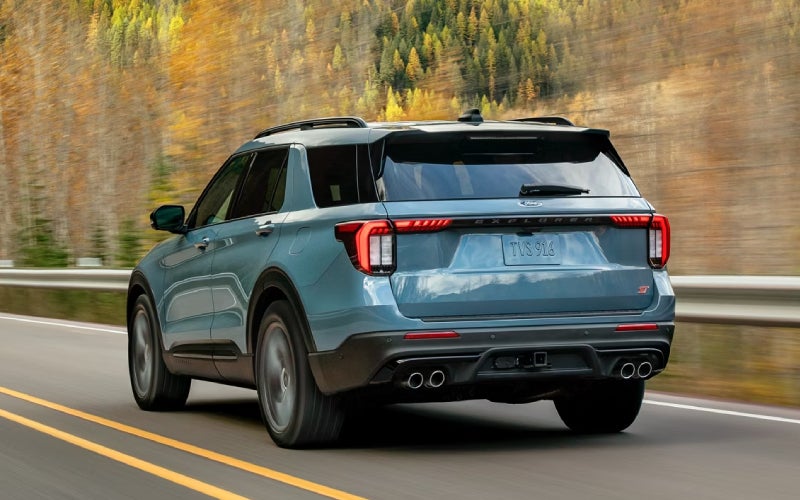
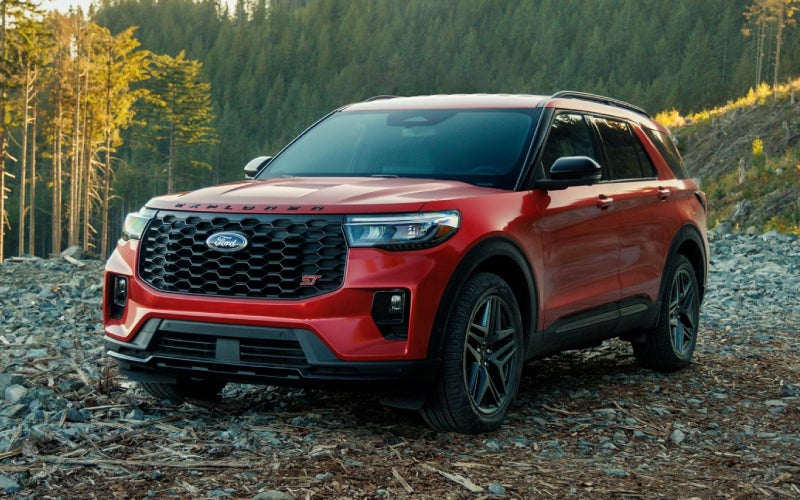
The 2026 Ford Explorer has earned attention from families and weekend adventurers across central Nebraska, and a key question many shoppers ask is whether it can confidently tow their gear. At Hastings Ford, we help drivers near Grand Island, NE understand what the Explorer can pull, how its powertrains support towing, and which features make hauling smoother and more secure.

The Explorer lineup offers two strong engine options paired with a 10-speed automatic transmission. Most trims feature a turbocharged 2.3-liter engine rated at 300 horsepower and 310 lb.-ft. of torque. For drivers who want maximum punch, the ST model uses a twin-turbocharged 3.0-liter V-6 delivering 400 horsepower and 415 lb.-ft. of torque, with that V-6 also optional on Platinum. Rear-wheel drive is standard, and all-wheel drive is available to add all-season traction for towing on gravel driveways or wet boat ramps around the Platte River and local lakes.

Properly equipped, the 2026 Ford Explorer offers a maximum towing capacity of 5,000 pounds. Every model includes a Class III Trailer Tow Package with a factory-mounted hitch, a trailer wiring harness, and Trailer Sway Control. That means whether you choose an Active, ST-Line, Tremor, Platinum, or ST, your Explorer arrives ready for real towing duty right off the lot—no aftermarket guesswork required.

  • Fishing boat and trailer: Many aluminum fishing rigs and their trailers commonly fall within the Explorer’s capability for weekends at nearby recreation areas.
  • Small camper: Compact travel trailers and pop-up campers are often a comfortable fit for family trips across Nebraska when packed thoughtfully.
  • Utility trailer: A single-axle trailer loaded with lawn equipment, DIY supplies, or household goods is a practical tow for local projects.
  • Toys and gear: ATVs, dirt bikes, or a couple of kayaks on a light trailer are easy add-ons for outdoor fun near Grand Island.

To help you get the most from your Explorer’s towing hardware, a quick pre-trip routine creates confidence and keeps you focused on the drive.

  1. Hitch and hardware: Confirm the correct ball mount, torque the hitch hardware, and secure safety chains in a crisscross pattern.
  2. Electrical connection: Plug in the trailer wiring harness, verify brake lights and turn signals, and check for secure cable routing.
  3. Weight distribution: Load heavier items over the axle, maintain proper tongue weight, and avoid exceeding the Explorer’s ratings.
  4. Tires and pressures: Set SUV and trailer tires to the recommended pressures and inspect tread depth and sidewalls.
  5. Mirrors and visibility: Adjust mirrors for trailer width and sightlines, and clear the rear glass for camera and mirror visibility.

Shoppers also ask how drivetrain and trim choices affect towing feel. Rear-wheel drive provides a stable baseline for highway hauling, while available all-wheel drive adds confidence on loose surfaces and during winter weather. For off-pavement approaches to campsites or boat launches, the new Tremor trim enhances traction with a lifted suspension, all-terrain tires, and a limited-slip rear differential—features designed for rougher access roads, while the Class III Trailer Tow Package handles the hitch duty.

The Explorer’s technology suite supports your time on the road, towing or not. A standard 13.2-inch LCD touchscreen anchors the Ford Digital Experience for seamless smartphone integration and navigation routing, while standard driver-assist features such as forward-collision warning with automatic emergency braking, blind-spot monitoring with rear cross-traffic alert, and lane-keeping assist help promote situational awareness as you move from city streets to rural highways.

If you would like hands-on guidance with hitching, weights, or loading, our team at Hastings Ford is ready to walk through your specific boat, camper, or trailer setup. We serve drivers across Grand Island, Hastings, Kearney, and the surrounding communities, and we are happy to help you pair the right Explorer trim and drivetrain with your towing plans.

Frequently Asked Questions:

What is the maximum towing capacity of the 2026 Ford Explorer?

The 2026 Ford Explorer offers a maximum towing capacity of 5,000 pounds when properly equipped. Every trim includes a Class III Trailer Tow Package with a factory hitch, a trailer wiring harness, and Trailer Sway Control to help stabilize the trailer in challenging conditions.

Which engine should I choose if I plan to tow often?

The 2.3-liter engine is a strong, efficient everyday choice for light to moderate trailers within the 5,000-pound rating. If you regularly tow near the top of that range or want brisk acceleration while loaded, the 3.0-liter V-6 in the ST (and available on Platinum) provides added confidence.

Does all-wheel drive change the Explorer’s tow rating?

The maximum towing capacity remains up to 5,000 pounds when properly equipped. Choosing all-wheel drive does not increase the rating; it adds traction benefits for launching a boat on a slick ramp, pulling out of a gravel campsite, or towing through winter weather around Grand Island.

Ready to see how the 2026 Ford Explorer feels with your daily driving and weekend plans? Visit Hastings Ford in Hastings, NE to compare trims, explore engine and drivetrain options, and review towing best practices tailored to your gear. Our team will help you select an Explorer that fits your routine today and your adventures tomorrow.
Request more 2026 Ford Explorer information

Posted in:

Related Posts

Confident Dirt-Road Traction and Hands-Free Highway Ease with the 2026 Ford Explorer for Grand Island, NE

Confident Dirt-Road Traction and Hands-Free Highway Ease with the 2026 Ford Explorer for Grand Island, NE

Hastings Ford - Confident Dirt-Road Traction and Hands-Free Highway Ease with the 2026 Ford Explorer for Grand Island, NE The 2026 Ford Explorer is engineered for the rhythms of Central Nebraska—quick runs across Grand Island for a busy day’s errands, easy miles on Highway 281, and the dust-and-gravel grit that comes with country shortcuts. What makes it shine is how it balances surefooted traction off the pavement with an equally relaxing highway experience, thanks to available Intelligent 4WD, a thoughtful suspension tune, and available Ford BlueCruise hands-free highway driving on compatible stretches. If your week swings between school drop-offs, work commutes, and an impromptu fishing run, the Explorer lineup gives you the features that simplify it all. BlueCruise Confidence Meets Real-World Nebraska Highways BlueCruise invites you to let the Explorer take over acceleration, braking, and steering on compatible highway sections while you keep your eyes on the road. When traffic starts and stops near the US-34/US-281 interchange or you are wrapping up a long drive toward Kearney, this system helps reduce fatigue. The steering is smooth, pacing is natural, and the cabin stays calm—especially when you pair it with available features like the B&O® Sound System by Bang & Olufsen® or heated and ventilated front seats on select trims. It is not a gimmick; it is highway help you can actually feel in daily use around Grand Island. What sets BlueCruise apart is the way it integrates into the Explorer’s already-confident drive. The platform’s standard rear-wheel-drive layout brings a planted, balanced feel at speed. Combine that with the available 3.0L EcoBoost® engine on select trims, and you get quick passes and easy merges even when fully loaded for a weekend over to Hall County Park. It is a list of smart upgrades, not just one flashy feature. Traction Where Pavement Ends: Why the Tremor Matters If your day includes washboard roads or rutted lanes on the outskirts of Grand Island, the Explorer Tremor® is worth a serious look. Its off-road-tuned suspension with increased ride height smooths out the chatter, while the Torsen® limited-slip rear axle helps send power where it is needed. Underbody deflector plates add peace of mind when you meet an unexpected rut or rock. Available 3.0L EcoBoost power provides extra torque to push through soft shoulders or pull away confidently on gravel. Even if you are not hitting forest trails, these upgrades bring real-world benefits in and around town. Dirt pull-offs by the Platte River, unpaved construction zones on residential developments—the Tremor setup keeps you moving confidently. And when the week returns to normal, you still get the comfort and organization that makes the Explorer an easy everyday choice. A Cabin That Works as Hard as You Do The best part about adding high-tech capability to the Explorer is that you do not give up the simple practicality families and busy professionals need. With available seating for up to seven and up to 85.8 cu ft of cargo room, you can rotate between people-hauling and gear-hauling without re-engineering your day. The power liftgate found on select trims streamlines grocery runs, and the available panoramic fixed glass roof adds light without adding clutter. Seating Flexibility: Three rows ready for friends, family, or co-workers when the schedule fills up Useful Cargo Space: Up to 85.8 cu ft shaped for strollers, coolers, travel crates, or field gear Everyday Comfort: Available heated and ventilated front seats keep you comfortable year-round Smart Visibility: Available 360-Degree Camera helps in tight lots or angled driveway exits Pick your trim and options to match your routine: Active makes daily life straightforward with heated front-row seats and a power liftgate. ST-Line layers in a sportier look plus an available B&O® Sound System by Bang & Olufsen®. Platinum™ may be your highway champion with BlueCruise equipped and available massaging front seats, while ST brings performance poise to the front of the pack. Which Explorer Suits Grand Island Driving? In and around Grand Island, the Explorer’s standard rear-wheel-drive platform brings confident towing balance and tracking on breezy, open stretches. If you split travel between highway and gravel, consider Intelligent 4WD—its traction logic helps you pull away smoothly on loose surfaces and stay steady as the weather changes. If most of your time is spent crossing town with passengers and cargo, the 2.3L EcoBoost® engine is responsive and efficient, and the three-row layout proves easy to live with. If you want an edge in power, select trims with the available 3.0L EcoBoost deliver strong passing muscle that makes long-distance travel feel shorter. Mostly Highway: Consider trims with BlueCruise for hands-free convenience on compatible roads Gravel & Dirt Mix: Intelligent 4WD provides traction confidence across changing surfaces Weekend Towing: Up to 5,000 lbs of capacity fits small boats, utility trailers, or pop-ups Comfort Priority: Look for heated, ventilated, or massaging seats on select models We keep the conversation practical because that is how you use your SUV. Test BlueCruise on stretches you drive every week. Try the 360-Degree Camera in a lot you know is tight. If dirt roads are part of your plan, take the Tremor on a route that shows its strengths. The right choice becomes clear the moment you feel the difference. Frequently Asked Questions: Is BlueCruise available on every 2026 Explorer? BlueCruise is available and equipped on select trims. Ask our team to show you current inventory with BlueCruise and take a hands-free highway demo on compatible sections nearby. How many passengers can the Explorer seat? The 2026 Explorer offers available seating for up to seven passengers, with flexible space that makes it easy to move between people and cargo. What is the maximum towing capacity? When properly equipped, the 2026 Explorer can tow up to 5,000 lbs—ideal for small boats, utility trailers, or compact campers for weekend trips from Grand Island. Is Intelligent 4WD worth it for city driving? If your routine includes gravel access roads, dirt parking areas, or slick conditions, Intelligent 4WD adds a traction advantage. For mostly paved driving, the standard rear-wheel-drive setup already delivers confident handling and stability. Which trim is best for off-pavement use? Explorer Tremor stands out with an off-road-tuned suspension, underbody protection, and a Torsen® limited-slip rear axle. It is built for dirt-road detours without giving up everyday comfort. We are proudly serving Juniata, Grand Island, and Aurora, and we would be glad to help you compare trims and features in a way that reflects your actual driving. Hastings Ford. Request more 2026 Ford Explorer information

Does RWD or available Intelligent 4WD make more sense on a 2026 Ford Explorer for Kearney, NE driving?

Does RWD or available Intelligent 4WD make more sense on a 2026 Ford Explorer for Kearney, NE driving?

Hastings Ford - Does RWD or available Intelligent 4WD make more sense on a 2026 Ford Explorer for Kearney, NE driving? Choosing between standard rear-wheel drive and available Intelligent 4WD on the 2026 Ford Explorer® is easier when you map it to real routes and real conditions around Kearney, NE. The right answer is the one that fits your daily use first, then covers your occasional adventures without overcomplicating ownership. Let’s break down how each drivetrain behaves and which one might feel like the perfect fit for your life. Start with what does not change: every 2026 Explorer® is designed to be composed, quiet, and comfortable. The standard 2.3L EcoBoost® I-4 provides confident acceleration, and the chassis feels settled on highways and city streets alike. From there, your drivetrain choice fine-tunes how the SUV responds to weather, surfaces, and the extra weight of cargo or a trailer. Why standard RWD just feels right for a lot of drivers Rear-wheel drive is standard for a reason. It gives the Explorer® a natural, balanced feel with reassuring straight-line stability and strong, predictable acceleration. Around Kearney, that matters on Highway 30 and I-80 stretches where crosswinds and long merges are part of the drive. If most of your year is paved, dry, and focused on commuting or errands, RWD helps you enjoy the Explorer®’s calm, quiet road manners while keeping the setup simple. RWD also pairs nicely with the 2.3L EcoBoost® I-4’s broad torque, giving you smooth pull-away from lights and impressive confidence passing slow-moving traffic on two-lane roads. The result is an SUV that feels planted and easy to live with day after day, without the extra complexity of a 4WD system you might rarely need. When available Intelligent 4WD earns its keep If your calendar includes gravel drives to lakes, trailheads, or construction sites, or if you regularly carry people and gear in mixed weather, available Intelligent 4WD is a smart upgrade. It continuously monitors traction and can proactively send power where it is needed, helping you stay composed on rain-slicked surfaces, dusty county roads, and unpaved parking lots after a ballgame. Pair 4WD with selectable drive modes, and you can tailor Explorer® to suit the day. That can mean dialing in a more confident launch in low-traction situations or softening responses when you want smooth, predictable control with people and cargo on board. If you are eyeing the Tremor® model, you will take that control further with an off-road tuned suspension, a Torsen® limited-slip rear axle for enhanced traction, and underbody protection with front and rear deflector plates. Think through how and where you drive most It helps to zoom out and consider your whole year, not just a highlight reel of trips. If you are mostly on pavement, value the simplest setup, and rarely leave maintained roads, RWD is a solid, confidence-inspiring default. If you see a steady mix of pavement, gravel, and weather swings or you want extra assurance on rural routes around Kearney, Intelligent 4WD is likely the better long-term fit. Mostly paved commutes: Choose RWD for balanced highway stability and a natural, calm drive. Mixed pavement and gravel: Pick available Intelligent 4WD for added traction and control on variable surfaces. Trail or lake weekends: Consider Tremor® with off-road tuned suspension and a Torsen® limited-slip rear axle. All-weather confidence: Intelligent 4WD pairs well with selectable drive modes for changing conditions. Remember, your drivetrain choice works hand-in-hand with other features. If you plan to tow up to 5,000 lbs when properly equipped, 4WD can add welcome stability on uneven surfaces. If you are focused on relaxed long-haul driving, the availability of Ford BlueCruise hands-free highway driving on compatible roads can reduce fatigue either way, whether you select RWD or 4WD. Trim paths that align with your decision The good news is that you have flexibility across the 2026 Explorer® family. Active and ST-Line deliver impressive value and style with the 2.3L EcoBoost® I-4, and you can choose the drivetrain that fits your routes. Tremor® layers in hardware for off-pavement confidence. Platinum™ and ST let you combine premium appointments and performance tuning with the drive system that suits your life. Across the lineup, the Ford Co-Pilot360® Assist+ suite and available 360-Degree Camera add confidence no matter which wheels are doing the work. Inside, every Explorer® earns its keep with available seating for up to seven and up to 85.8 cu ft of cargo space. Premium options like the B&O® Sound System by Bang & Olufsen®, ambient lighting, and an available panoramic fixed glass roof with power sunshade make it easy to settle into the cabin once you have chosen your drivetrain. It is a reminder that the Explorer® is built for people first, powertrain second. How to decide quickly and confidently There is no substitute for a back-to-back test drive. Sample RWD on your usual routes to feel the balanced highway poise, then try Intelligent 4WD over the same stretch and a nearby gravel connector to experience the traction difference. If you plan to tow or pack the cabin to capacity, bring that perspective to your drive and see how the Explorer® responds with weight on board. If you prefer a simple decision rule, use this: choose RWD if 80 percent or more of your driving is paved and predictable; choose Intelligent 4WD if your regular week includes gravel, weather variability, or family gear that benefits from extra traction when it counts. Hastings Ford is here to help you match the right configuration to your daily reality, not a one-size-fits-all scenario. Our team is serving Aurora, Kearney, and York with straightforward guidance, back-to-back drives, and clear explanations so your choice feels obvious when you are done. And once you have your drivetrain decided, we can help you fine-tune the rest of your Explorer® build, from towing packages to technology to interior comforts, so the whole SUV fits seamlessly into your routine. If you are ready to feel the difference for yourself, set up a short appointment and we will map a route that mirrors your daily drive. That way, when you make your decision, you will know it is the right one for the way you live, work, and travel. Hastings Ford will make the process calm, simple, and focused on what matters to you. Frequently Asked Questions: Is Intelligent 4WD always on, or do I need to switch it manually? Intelligent 4WD continuously monitors traction and can proactively distribute power where it is needed. You can also use selectable drive modes to tailor the system’s behavior to conditions. Does choosing 4WD change my towing capability? When properly equipped, the 2026 Explorer® can tow up to 5,000 lbs. 4WD can add traction benefits when you are launching on a ramp or managing weight on uneven surfaces, but the proper towing package selection is key. Which trims are best for light off-pavement use? Tremor® is purpose-built with an off-road tuned suspension, a Torsen® limited-slip rear axle, and underbody protection with front and rear deflector plates, making it the top choice for unpaved adventures. Does Ford BlueCruise work with both RWD and 4WD configurations? Yes, available Ford BlueCruise is offered based on trim and package content, not limited to a specific drivetrain. It assists with hands-free highway driving on compatible roads to help reduce fatigue. Request more 2026 Ford Explorer information

2026 Ford Explorer or 2026 Toyota Highlander: Which 3-row SUV has more confident highway passing power around Juniata, NE?

2026 Ford Explorer or 2026 Toyota Highlander: Which 3-row SUV has more confident highway passing power around Juniata, NE?

Hastings Ford - 2026 Ford Explorer or 2026 Toyota Highlander: Which 3-row SUV has more confident highway passing power around Juniata, NE? When shoppers compare three-row SUVs, this question comes up again and again: which one feels stronger and more composed when you need to merge or pass on a busy highway near Juniata, NE? Let’s walk through how Explorer® and Highlander approach real-world power, stability, and confidence—without getting lost in spec sheets. Why passing power is about more than horsepower On open two-lane stretches, strong midrange torque, well-chosen gearing, and chassis stability matter as much as peak output. Explorer’s rear-wheel-drive foundation contributes to a planted feel at speed, and its available 3.0L EcoBoost® V6 supplies serious reserve for brisk 45-to-65 mph acceleration. Highlander’s 2.4-liter turbo gas engine provides smooth, consistent thrust, and the Hybrid powertrain emphasizes efficiency-focused tuning. Both are capable, but the strongest passing confidence comes from a blend of torque delivery and chassis calm—precisely where Explorer’s ST tuning and rear-drive balance give it an edge. Explorer strengths you’ll notice on the road When traffic opens and you spot your window, Explorer’s available 3.0L EcoBoost V6 responds quickly, aided by transmission logic designed to drop gears decisively. Even with a full cabin and weekend cargo, the available 400-hp ST model maintains momentum cleanly. Add in the stable, rear-drive proportions and available performance brakes, and the SUV stays composed as speeds climb. Highlander’s gas engine is no slouch—its turbocharged torque is easy to live with—but you won’t find a 400-hp performance configuration or a rear-drive bias in its lineup. Rear-drive balance: A planted highway feel that helps the vehicle stay settled during quick passes. Available performance hardware: ST’s sport-tuned suspension and performance brakes with red-painted calipers inspire confidence. Driver-assist reassurance: Ford Co-Pilot360® Assist+ and available BlueCruise can help reduce fatigue on long runs. How driver-assistance changes long-distance confidence Long trips create a different kind of fatigue—constant small inputs to stay centered, pace traffic, and react to flow changes. Explorer’s available BlueCruise hands-free highway driving assistance helps accelerate, brake, and steer on compatible roads while you remain attentive. It’s the kind of technology you feel most during hour three on I-80, when a steadier, calmer drive matters. Highlander brings Toyota Safety Sense 2.5+, which includes Full-Speed Range Dynamic Radar Cruise Control and Lane Tracing Assist—excellent features that reduce workload—but it does not offer a hands-free highway system. Passing with a trailer or full load Both SUVs are rated to tow up to 5,000 pounds when properly equipped. Where Explorer stands apart is how it combines that capability with available power headroom. If you’re hauling a pair of ATVs or a small camper and need to pass a slow-moving truck, Explorer’s available 3.0L EcoBoost V6—and the sport-tuned hardware on ST—add the breathing room that makes those moves feel natural. Highlander’s towing manners are confident, particularly with Dynamic Torque Vectoring AWD, but peak thrust won’t feel as robust. Ride composure in Nebraska crosswinds Nebraska highways can serve up steady crosswinds. Explorer’s rear-drive proportions contribute to a settled stance, and the steering weights up predictably as speed rises. That calm is a big part of why drivers sense more confidence when merging and passing. Highlander remains stable and reassuring too, and its available Panoramic View Monitor helps in low-speed maneuvers. For highway poise, the Ford’s fundamentals give it the edge. How to test this for yourself Numbers are helpful, but what you’ll feel in the seat matters most. Replicate your real-world scenario: fill the vehicle with passengers or cargo, pick a familiar on-ramp or two-lane stretch, and evaluate how predictably the SUV builds speed, tracks straight, and settles after you complete the pass. Bring your usual passengers and gear so the vehicle’s weight mirrors your routine. Use a familiar merge lane to gauge how confidently you reach traffic speed. On a safe passing zone, note how quickly the vehicle responds from 45 to 65 mph. After the pass, observe how stable it feels returning to your lane. Frequently Asked Questions: Does Explorer have a hands-free highway system to help on longer trips? Yes. Available BlueCruise can help with steering, acceleration, and braking on compatible roads while you stay attentive, reducing fatigue during long highway stretches. How do the SUVs compare for towing confidence during passes? Both can tow up to 5,000 lbs when properly equipped. Explorer’s available 3.0L EcoBoost V6 and performance-oriented ST tuning provide extra passing reserve with a loaded trailer. Is Highlander’s driver-assistance package comparable? Toyota Safety Sense 2.5+ includes adaptive cruise, lane tracing, and more—robust features that ease daily driving—but it does not include a hands-free highway system. Which feels more planted at speed in crosswinds? Explorer’s rear-drive architecture contributes to a calm, planted feel at highway speeds, which many drivers find reassuring in gusty conditions common on open Nebraska routes. If you’re focused on confident merges and decisive passes with family and gear on board, Explorer’s available power and rear-drive balance give it the advantage. Visit our team to map a route that mirrors your routine and compare both SUVs back to back. Hastings Ford is serving Juniata, Grand Island, and Aurora with test drives that reflect the way you actually drive—so your decision is clear the moment you hit the on-ramp. When you’re ready, we’ll set you up with an ST, ST-Line, Tremor®, or Platinum™ drive and match features like the B&O® Sound System by Bang & Olufsen®, Ford Co-Pilot360® Assist+, and BlueCruise to your needs. Then you can see exactly why passing power and highway calm are strengths you’ll feel immediately. Your time matters, and so does your confidence behind the wheel. If you want a conversation about torque curves, towing setups, or how to configure an SUV that fits both weekday commutes and weekend getaways, count on our local guidance. We’ll help you create a short, representative loop that answers your specific question—so your next highway merge feels like second nature. And as always, we’re here for the long haul with straightforward advice, thoughtful recommendations, and service support that keeps the focus on you. From the first test drive to every mile after, Hastings Ford stands ready to help you choose with confidence. Request more 2026 Ford Explorer information