

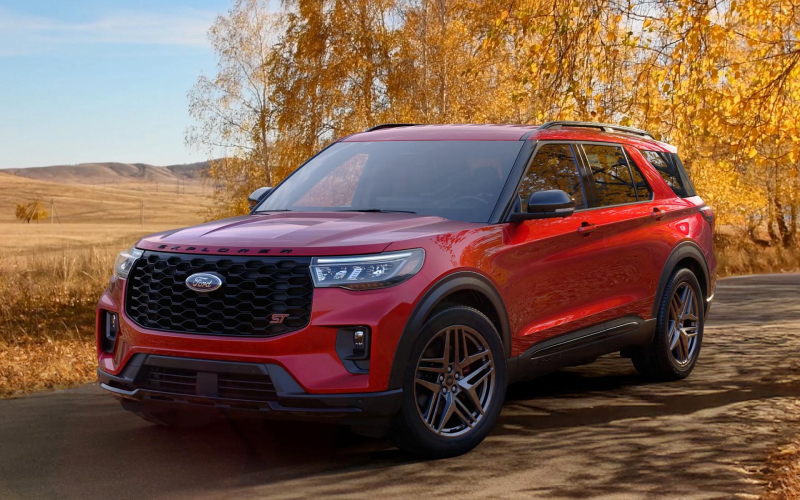
Hastings Ford – 2026 Ford Explorer or 2026 Toyota Highlander: Which 3-row SUV has more confident highway passing power around Juniata, NE?
When shoppers compare three-row SUVs, this question comes up again and again: which one feels stronger and more composed when you need to merge or pass on a busy highway near Juniata, NE? Let’s walk through how Explorer® and Highlander approach real-world power, stability, and confidence—without getting lost in spec sheets.
Why passing power is about more than horsepower
On open two-lane stretches, strong midrange torque, well-chosen gearing, and chassis stability matter as much as peak output. Explorer’s rear-wheel-drive foundation contributes to a planted feel at speed, and its available 3.0L EcoBoost® V6 supplies serious reserve for brisk 45-to-65 mph acceleration. Highlander’s 2.4-liter turbo gas engine provides smooth, consistent thrust, and the Hybrid powertrain emphasizes efficiency-focused tuning. Both are capable, but the strongest passing confidence comes from a blend of torque delivery and chassis calm—precisely where Explorer’s ST tuning and rear-drive balance give it an edge.
Explorer strengths you’ll notice on the road
When traffic opens and you spot your window, Explorer’s available 3.0L EcoBoost V6 responds quickly, aided by transmission logic designed to drop gears decisively. Even with a full cabin and weekend cargo, the available 400-hp ST model maintains momentum cleanly. Add in the stable, rear-drive proportions and available performance brakes, and the SUV stays composed as speeds climb. Highlander’s gas engine is no slouch—its turbocharged torque is easy to live with—but you won’t find a 400-hp performance configuration or a rear-drive bias in its lineup.
- Rear-drive balance: A planted highway feel that helps the vehicle stay settled during quick passes.
- Available performance hardware: ST’s sport-tuned suspension and performance brakes with red-painted calipers inspire confidence.
- Driver-assist reassurance: Ford Co-Pilot360® Assist+ and available BlueCruise can help reduce fatigue on long runs.
How driver-assistance changes long-distance confidence
Long trips create a different kind of fatigue—constant small inputs to stay centered, pace traffic, and react to flow changes. Explorer’s available BlueCruise hands-free highway driving assistance helps accelerate, brake, and steer on compatible roads while you remain attentive. It’s the kind of technology you feel most during hour three on I-80, when a steadier, calmer drive matters. Highlander brings Toyota Safety Sense 2.5+, which includes Full-Speed Range Dynamic Radar Cruise Control and Lane Tracing Assist—excellent features that reduce workload—but it does not offer a hands-free highway system.
Passing with a trailer or full load
Both SUVs are rated to tow up to 5,000 pounds when properly equipped. Where Explorer stands apart is how it combines that capability with available power headroom. If you’re hauling a pair of ATVs or a small camper and need to pass a slow-moving truck, Explorer’s available 3.0L EcoBoost V6—and the sport-tuned hardware on ST—add the breathing room that makes those moves feel natural. Highlander’s towing manners are confident, particularly with Dynamic Torque Vectoring AWD, but peak thrust won’t feel as robust.
Ride composure in Nebraska crosswinds
Nebraska highways can serve up steady crosswinds. Explorer’s rear-drive proportions contribute to a settled stance, and the steering weights up predictably as speed rises. That calm is a big part of why drivers sense more confidence when merging and passing. Highlander remains stable and reassuring too, and its available Panoramic View Monitor helps in low-speed maneuvers. For highway poise, the Ford’s fundamentals give it the edge.
How to test this for yourself
Numbers are helpful, but what you’ll feel in the seat matters most. Replicate your real-world scenario: fill the vehicle with passengers or cargo, pick a familiar on-ramp or two-lane stretch, and evaluate how predictably the SUV builds speed, tracks straight, and settles after you complete the pass.
- Bring your usual passengers and gear so the vehicle’s weight mirrors your routine.
- Use a familiar merge lane to gauge how confidently you reach traffic speed.
- On a safe passing zone, note how quickly the vehicle responds from 45 to 65 mph.
- After the pass, observe how stable it feels returning to your lane.
Frequently Asked Questions:
Does Explorer have a hands-free highway system to help on longer trips?
Yes. Available BlueCruise can help with steering, acceleration, and braking on compatible roads while you stay attentive, reducing fatigue during long highway stretches.
How do the SUVs compare for towing confidence during passes?
Both can tow up to 5,000 lbs when properly equipped. Explorer’s available 3.0L EcoBoost V6 and performance-oriented ST tuning provide extra passing reserve with a loaded trailer.
Is Highlander’s driver-assistance package comparable?
Toyota Safety Sense 2.5+ includes adaptive cruise, lane tracing, and more—robust features that ease daily driving—but it does not include a hands-free highway system.
Which feels more planted at speed in crosswinds?
Explorer’s rear-drive architecture contributes to a calm, planted feel at highway speeds, which many drivers find reassuring in gusty conditions common on open Nebraska routes.
If you’re focused on confident merges and decisive passes with family and gear on board, Explorer’s available power and rear-drive balance give it the advantage. Visit our team to map a route that mirrors your routine and compare both SUVs back to back. Hastings Ford is serving Juniata, Grand Island, and Aurora with test drives that reflect the way you actually drive—so your decision is clear the moment you hit the on-ramp.
When you’re ready, we’ll set you up with an ST, ST-Line, Tremor®, or Platinum™ drive and match features like the B&O® Sound System by Bang & Olufsen®, Ford Co-Pilot360® Assist+, and BlueCruise to your needs. Then you can see exactly why passing power and highway calm are strengths you’ll feel immediately. Your time matters, and so does your confidence behind the wheel.
If you want a conversation about torque curves, towing setups, or how to configure an SUV that fits both weekday commutes and weekend getaways, count on our local guidance. We’ll help you create a short, representative loop that answers your specific question—so your next highway merge feels like second nature.
And as always, we’re here for the long haul with straightforward advice, thoughtful recommendations, and service support that keeps the focus on you. From the first test drive to every mile after, Hastings Ford stands ready to help you choose with confidence.
Request more 2026 Ford Explorer information
Connect with us

